
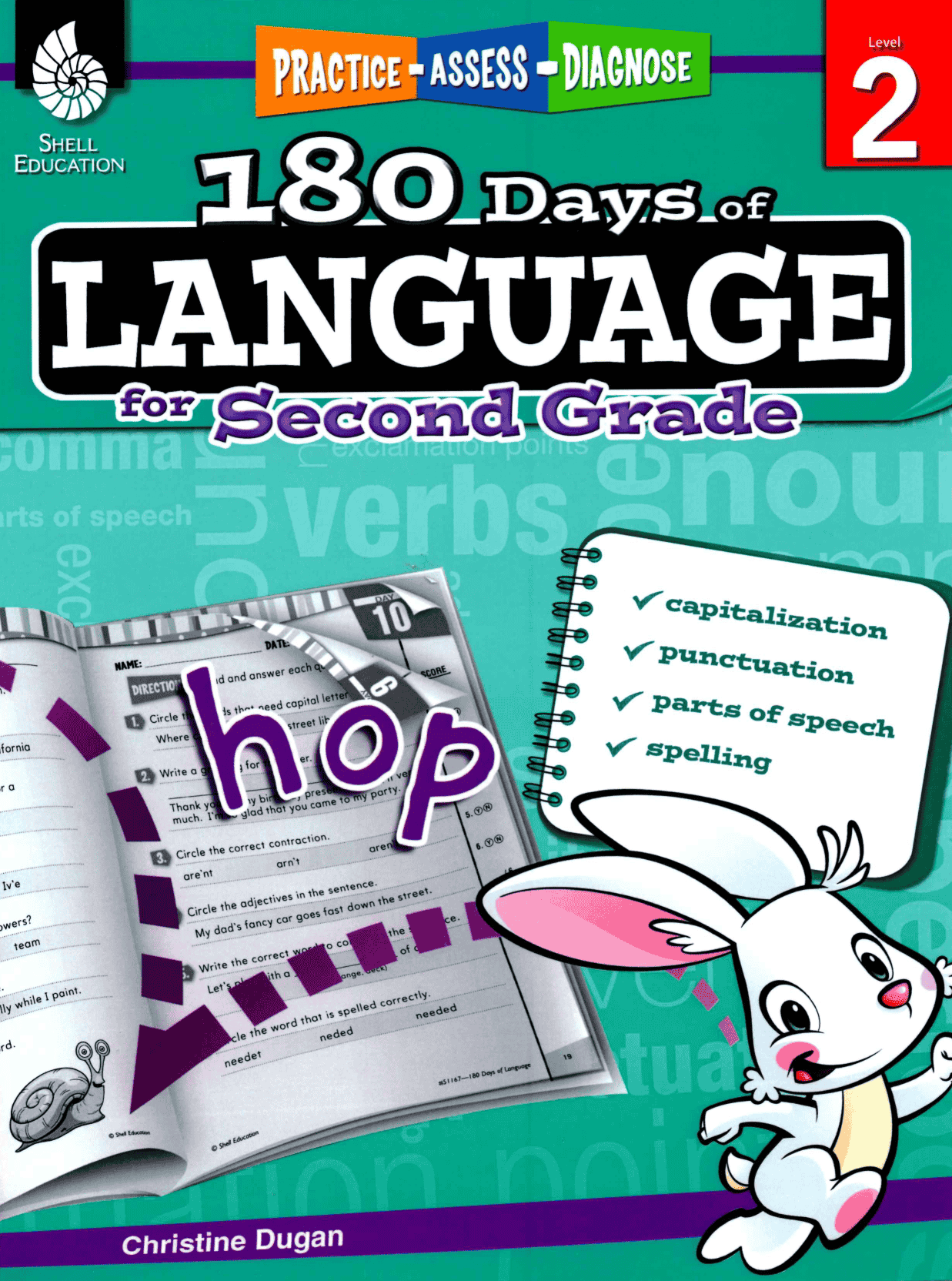
这是一套广受欢迎的练习册系列,专为从幼儿园到小学六年级(有时延伸至八年级)的学生设计。其核心目标是提供每日、聚焦式的练习,专注于语法、语言规范(标点符号、大小写)和惯用法等基础语言技能,为有效的写作和沟通打下坚实基础。
以下是详细说明:
-
核心理念与结构:
-
每日练习: 核心是包含180个简短、有针对性的练习——对应典型学年的每一天。
-
快速且专注: 活动设计为每天只需 10-15分钟,便于融入任何课程或日常安排,不会给学生造成负担。
-
分级设计: 每个年级(K-6)都有专属的练习册,内容和难度严格对应学生的发展阶段和教育标准。
-
格式统一: 虽然练习活动多样,但每日的结构提供了一致性和可预测性。练习通常按周组织,围绕特定的技能组展开。
-




-
涵盖的核心技能:
-
语法: 词性(名词、动词、形容词、副词、代词、连词、介词、感叹词)、主谓一致、动词时态、句子类型(陈述句、疑问句、祈使句、感叹句)、短语、从句。
-
语言规范:
-
大小写: 句子开头、专有名词、标题等。
-
标点符号: 句号、问号、感叹号、逗号、撇号(所有格和缩略)、引号、冒号、分号。
-
-
惯用法: 正确的词语选择(同音异义词、易混淆词)、所有格形式、缩略形式、复数形式、形容词/副词的比较级和最高级形式。
-
编辑练习: 一个非常重要的组成部分,涉及在句子或短段落中识别和纠正错误——这是一项至关重要的现实世界写作技能。
-
-
典型的每日练习内容:
-
选择题: 识别正确的语法、标点或惯用法。
-
简答题: 应用特定规则写句子,识别词性。
-
句子合并/改写: 练习句子结构。
-
使用修改符号: 使用校对符号纠正错误。
-
句子分析: 圈出/划出特定成分(如主语、谓语)。
-
“圈出正确答案”: 针对大小写或标点等概念。
-
每周重点: 通常,第1-4天介绍/练习一项技能,第5天是一个评估或编辑任务,应用本周所学的技能。
-
-
目标用户与使用场景:
-
课堂教师: 非常适合用作课前热身、课堂导入、学习中心活动、家庭作业或有针对性的干预练习。为日常语言训练节省大量备课时间。
-
家庭教育家长: 为日常语言艺术练习提供了一个结构化的、符合标准的、易于实施的资源。
-
辅导老师: 作为针对特定薄弱环节的补充练习材料非常出色。
-
家长(补充学习): 在家进行额外练习,巩固学校所学。
-
学生: 需要持续、小剂量的练习来掌握基础语言规则的学生。
-
-
主要特点与优势:
-
螺旋式学习: 概念被引入后,会在全年中不断复现和深化,促进知识的保留和掌握。
-
标准对齐: 明确关联到共同核心州立标准 (CCSS) 及其他州标准,确保内容相关性。
-
诊断性与总结性评估: 包含初始的诊断性测评和定期的形成性评估(通常是每周),用于跟踪进度并识别需要支持的领域。
-
答案详解: 书后附有全面的答案详解,便于批改或学生自查。
-
数字资源: 许多版本包含数字文件(PDF,有时是互动格式)的访问权限,方便投影或灵活打印。
-
零/低备课: 即拿即用的练习活动为教育工作者和家长节省了宝贵时间。
-
建立信心: 通过可完成的每日任务进行持续练习,建立学生对语言规范的信心。
-
提升写作能力: 扎实的语法和语言规范是清晰、有效、精炼写作的基础。
-
-
它不是什么:
-
完整的语言艺术课程: 它不涵盖阅读理解、拼写(尽管相关)、深度词汇、文学研究或大量的创意写作指导。它专门专注于语言艺术的“规范/惯例”这一支柱。
-
侧重理论: 它以实践为导向,不侧重于冗长的语法规则解释(尽管通常包含简要的说明)。它假定学生已对相关概念有过初步的接触或教学。
-
负担过重: 简短的每日形式避免了学生的倦怠感。
-
-
可能的批评/考量:
-
重复性: 有些人觉得每日形式有些重复,尽管这是为了达到掌握程度的刻意设计。
-
缺乏语境: 练习通常在孤立的句子中进行,并非总是在丰富的文本语境中。编辑练习有助于缓解这一点。
-
范围局限: 重点放在语言规范上;不涉及写作风格、语体或复杂的修辞元素。
-
总结:
Shell Education 的 《180天语言训练》 是一套高度实用、高效且目标明确的练习册系列,旨在提供语法、标点、大小写和惯用法方面的每日基础练习。它的优势在于其一致性、与标准的对齐性、节省时间的设计以及对构建熟练写作和交流所必需的基础技能的专注。对于课堂、家庭教育、辅导或家庭额外练习来说,它是一个极好的补充资源,尤其因其掌握语言规范的结构化方法而受到重视。
购买渠道: 可以在 Shell Education / Teacher Created Materials 官网、亚马逊 (Amazon)、当当网、京东等主要教育零售商或图书销售平台找到该系列书籍。
希望这份详细的中文介绍能帮助您全面了解 Shell Education 的《180天语言训练》系列!它是一个非常有价值的工具,值得教育工作者和家长考虑。
Shell Education’s “180 Days of Language” is a popular series of practice workbooks designed for students from Kindergarten to Grade 6 (sometimes extending to Grade 8). Its core mission is to provide daily, focused practice on foundational language skills, primarily grammar, mechanics (punctuation, capitalization), and usage, building a strong base for effective writing and communication.
Here’s a detailed breakdown:
-
Core Concept & Structure:
-
Daily Practice: The cornerstone is 180 short, targeted exercises – one for each day of the typical school year.
-
Quick & Focused: Activities are designed to take 10-15 minutes per day, making them easy to integrate into any curriculum or routine without overwhelming students.
-
Grade-Specific: Each grade level (K-6) has its own dedicated book, with content and complexity carefully aligned to developmental stages and standards.
-
Consistent Format: While activities vary, the daily structure provides predictability. Weeks are often grouped around specific skill sets.
-
-
Key Skills Covered:
-
Grammar: Parts of speech (nouns, verbs, adjectives, adverbs, pronouns, conjunctions, prepositions, interjections), subject-verb agreement, verb tenses, sentence types (declarative, interrogative, imperative, exclamatory), phrases, clauses.
-
Mechanics: Capitalization (sentences, proper nouns, titles, etc.), punctuation (periods, question marks, exclamation points, commas, apostrophes, quotation marks, colons, semicolons).
-
Usage: Correct word choice (homophones, frequently confused words), possessives, contractions, plurals, comparative/superlative forms.
-
Editing Practice: A significant component involves identifying and correcting errors within sentences or short paragraphs – a crucial real-world writing skill.
-
-
Typical Daily Activity Components:
-
Multiple Choice: Identifying correct grammar, punctuation, or usage.
-
Short Answer: Writing sentences applying a specific rule, identifying parts of speech.
-
Sentence Combining/Rewriting: Practicing sentence structure.
-
Editing Marks: Using proofreading symbols to correct errors.
-
Sentence Analysis: Underlining/circling specific elements (e.g., subject, verb).
-
“Circle the Correct Answer”: For concepts like capitalization or punctuation.
-
Weekly Focus: Often, days 1-4 introduce/practice a skill, and day 5 is an assessment or editing task applying the week’s skills.
-
-
Target Audience & Use Cases:
-
Classroom Teachers: Ideal for bell-ringers, warm-ups, centers, homework, or targeted intervention. Saves significant lesson planning time for daily practice.
-
Homeschool Parents: Provides a structured, standards-aligned, easy-to-implement resource for daily language arts practice.
-
Tutors: Excellent for supplemental practice on specific weaknesses.
-
Parents (Supplemental): For extra practice at home to reinforce school learning.
-
Students: Who need consistent, bite-sized practice to master foundational language rules.
-
-
Key Features & Benefits:
-
Spiral Learning: Concepts are introduced and then revisited throughout the year, promoting retention and mastery.
-
Standards-Aligned: Explicitly correlated to Common Core State Standards (CCSS) and other state standards, ensuring relevance.
-
Diagnostic & Summative Assessments: Includes initial diagnostic assessments and regular formative assessments (often weekly) to track progress and identify areas needing support.
-
Answer Key: A comprehensive answer key is included in the back for easy grading or self-checking.
-
Digital Resources: Many versions include access to digital files (PDFs, sometimes interactive formats) for projection or printing flexibility.
-
No/Low Prep: Ready-to-use activities save educators and parents valuable time.
-
Builds Confidence: Consistent practice with achievable daily tasks builds student confidence in language mechanics.
-
Improves Writing: Strong grammar and mechanics are foundational for clear, effective, and polished writing.
-
-
What It’s NOT:
-
A Full Language Arts Curriculum: It doesn’t cover reading comprehension, spelling (though related), vocabulary depth, literature study, or extensive creative writing instruction. It’s focused specifically on the “conventions” pillar of language arts.
-
Heavy on Theory: It’s practice-oriented, not focused on lengthy explanations of grammar rules (though brief instructions are usually included). It assumes some prior introduction or teaching of the concepts.
-
Overwhelming: The short daily format avoids burnout.
-
-
Criticisms/Considerations:
-
Repetition: Some find the daily format repetitive, though this is intentional for mastery.
-
Lack of Context: Practice is often in isolated sentences, not always within rich text. The editing exercises help mitigate this.
-
Scope: Focuses heavily on mechanics; doesn’t address style, voice, or complex rhetorical elements.
-
In Summary:
Shell Education’s “180 Days of Language” is a highly practical, efficient, and targeted workbook series providing essential daily practice in grammar, punctuation, capitalization, and usage. Its strength lies in its consistency, alignment to standards, time-saving design, and focus on building foundational skills necessary for proficient writing and communication. It’s an excellent supplemental resource for classrooms, homeschools, tutoring, or extra home practice, particularly valued for its structured approach to mastering language conventions. You can find it on the Shell Education/Teacher Created Materials website, Amazon, and major educational retailers.
